St Brigid’s Day

Published February 1, 2016 by D in News

1 February is the feast of St Brigid

According to tradition St. Brigid was born at Faughart near Dundalk, County Louth in 452AD. According to her biographers her parents were Dubhthach, a pagan chieften of Leinster, and Brocca, a Christain Pictish slave who had been baptized by St. Patrick.  Brigid spent her youth laboring on her father’s farm.  Despite her father’s opposition she was determined to enter religious life.  She had a generous heart and never refused any poor who came to her father’s door.  This angered her father and he tried to marry her off.  However, legend tells that Brigid prayed for her beauty to be taken from her and so it was until the day that Dubhtach’s exasperation reached the point where he agreed to send her to a convent.  Upon receiveing her vows from St. Mel Brigid’s beauty returned to her.

She is then believed to have founded her first convent at Clara in Co. Offaly.  Around 470 she founded Kildare Abbey, a double monastery, for nuns and monks—the first of it’s kind—on the plains of Cill-Dara “the church of the oak”.  The story tells that when St. Mel was blessing her as Abbess of the Abbey he inadvertently used the rite for consecration of a Bishop and once complete this could not be rescinded under any circumstances.  Brigid and her successor Abbesses at Kildare had an administrative authority equal to that of a Bishop until the Synod of Kells in 1152.

In her lifetime she was regarded as a Saint.  Kildare Abbey became one of the most prestigious monasteries in Ireland, famed throughout Christian Europe.  In the scriptorium of the monastery, the fabled illuminated manuscript—the Book of Kildare was created, now lost to posterity unless, as some believe, it was actually the Book of Kells.


St. Brigid died in Kildare around 525AD and was buried in a tomb before the high altar of her abbey church.  After some time her remains were exhumed and moved to Downpatrick to rest with the two other patron saints of Ireland—Patrick and Columba (Columcille). Her skull was extracted and brought to Portugal by three Irish nobleman, where it remains.

There is widespread devotion to her in Ireland where she is known as the “Mary of the Gael” and her cult was brought to Europe by Irish missionaries such as Foillan, in the centuries after her death . In Belgium there is a chapel (7th-10th century) dedicated to Sainte Brigide at Fosses-la-Ville.

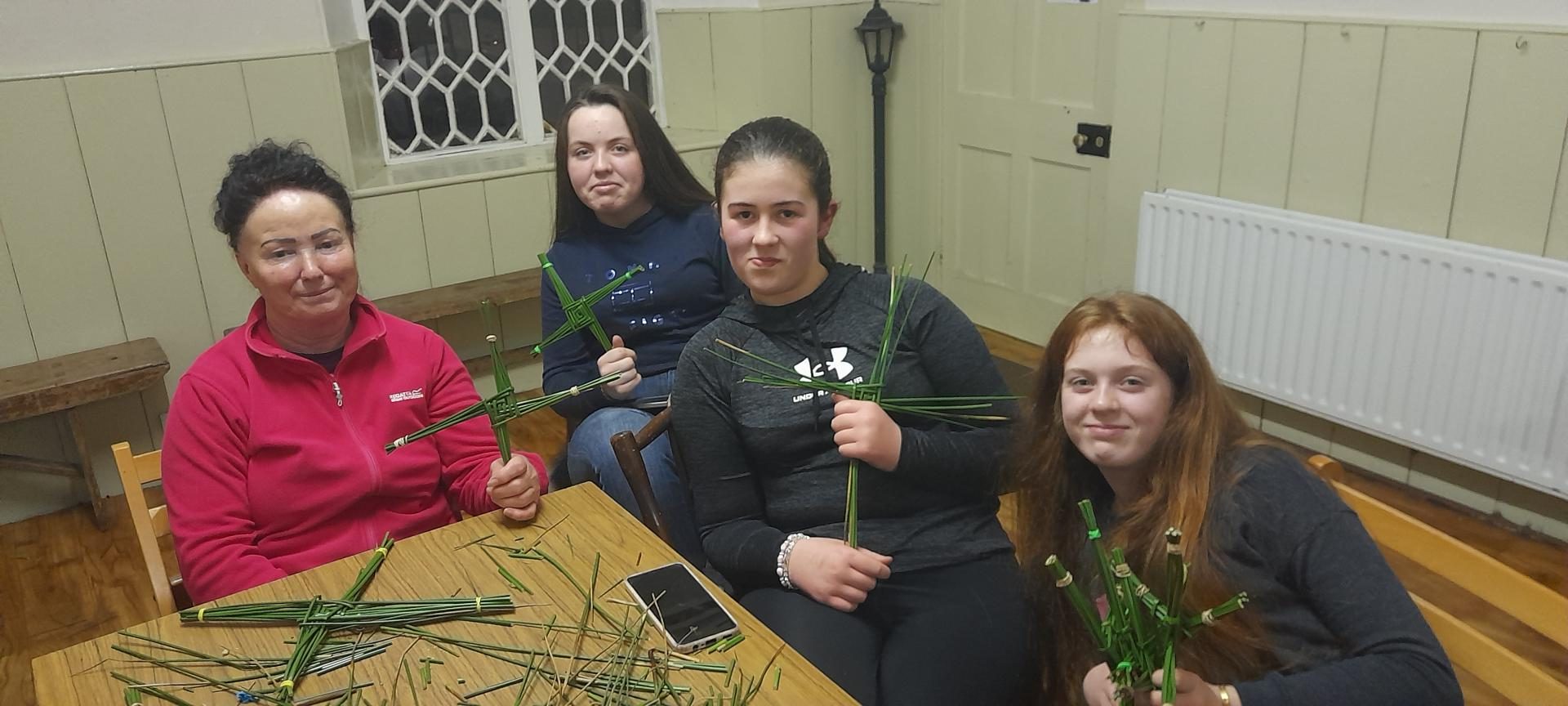
Legends abound about the colourful St. Brigid.  The most popular is the story of the St. Brigid’s Cross seen in most Irish homes to this day.  The story goes that Brigid was summoned to the deathbed of a dying pagan chieftain—some versions say that it was that of her father Dubhtach.  While the man lay dying and Brigid prayed at his bedside she picked up some rushes from the floor and began weaving them into a cross shape.  The chieftain, although on the brink of death, opened his eyes curiously and asked her what she was doing.  She told him about Christianity and Christ’s death on the cross and resurrection and he converted to Christianity before his death.

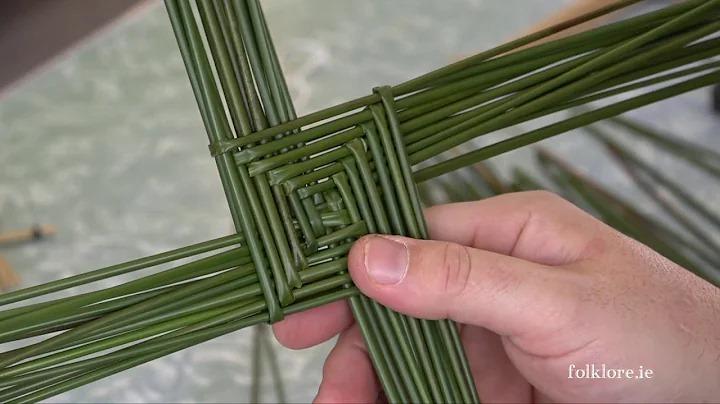
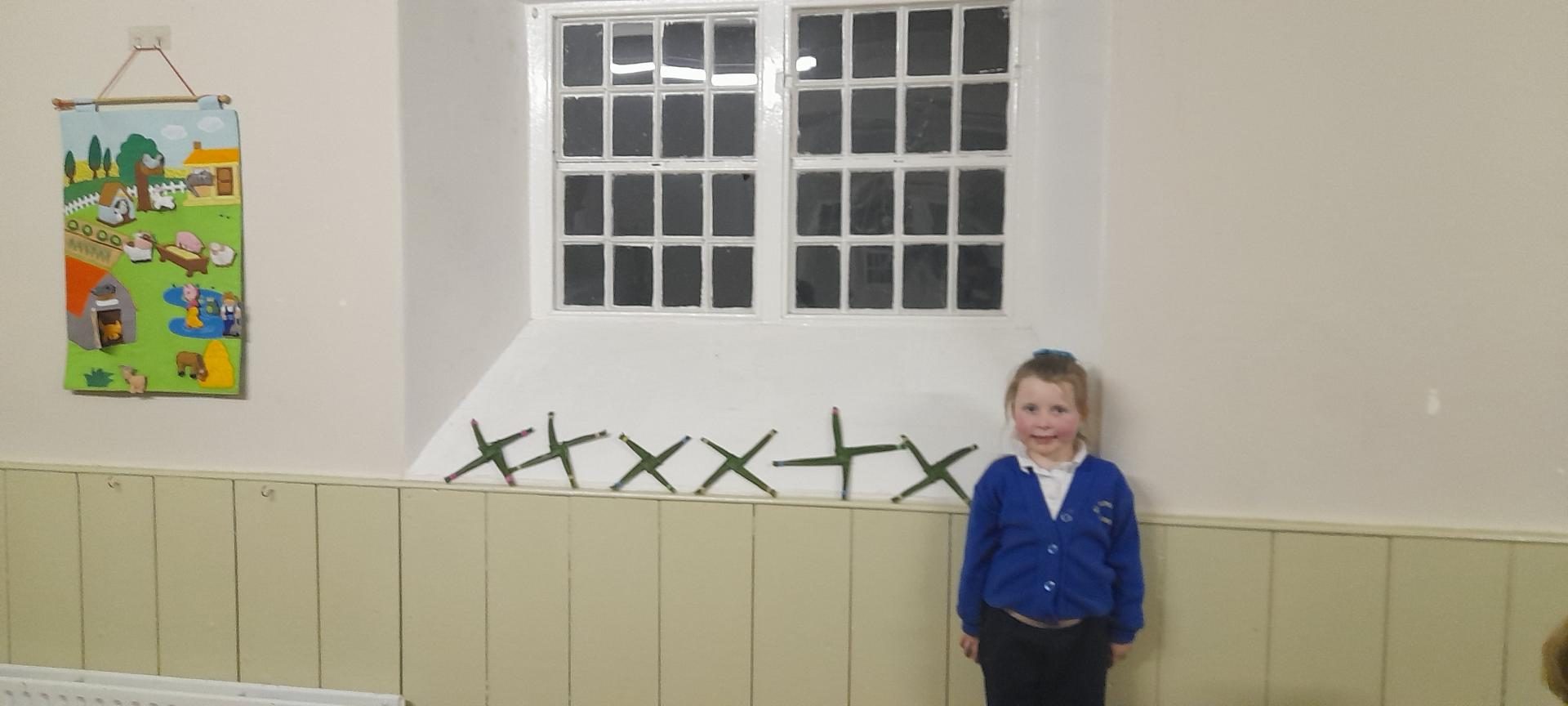
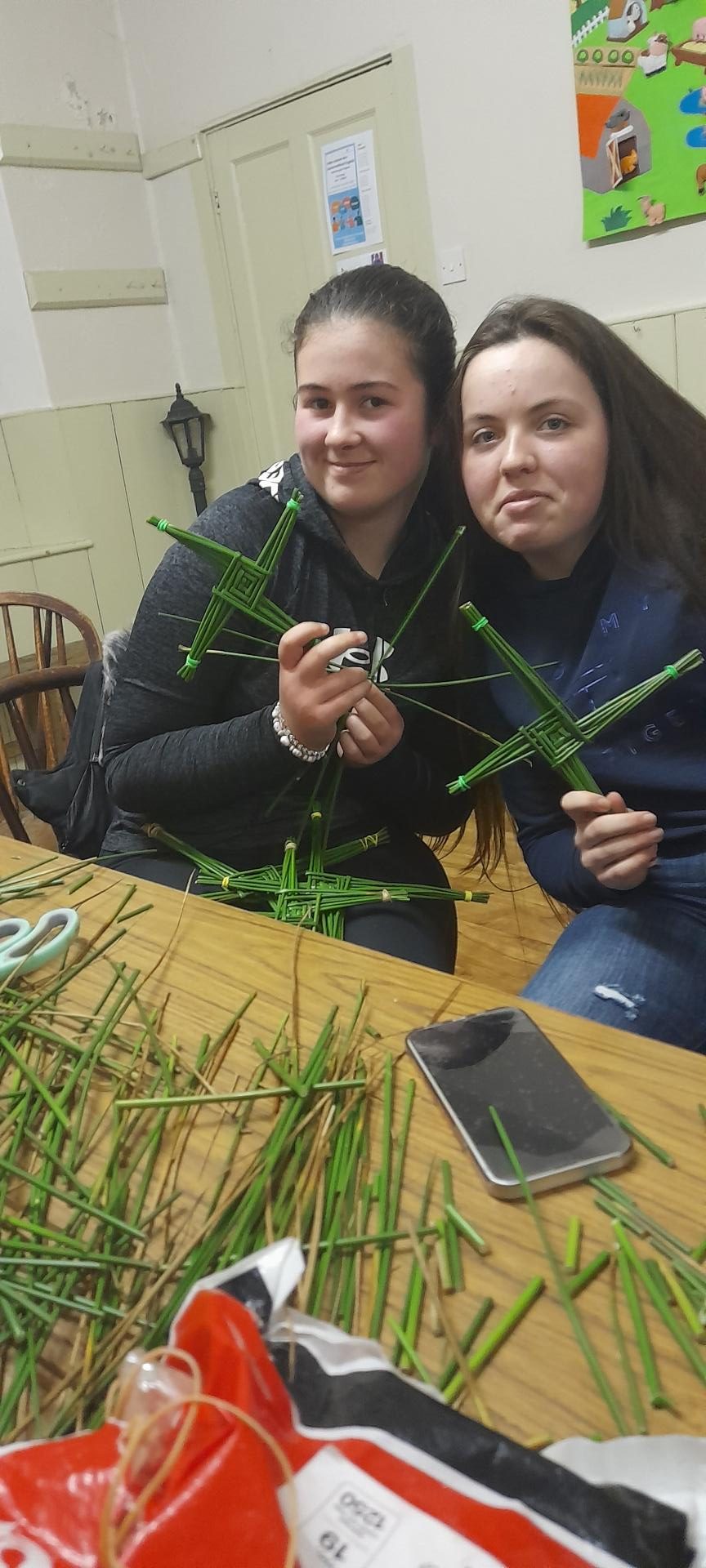
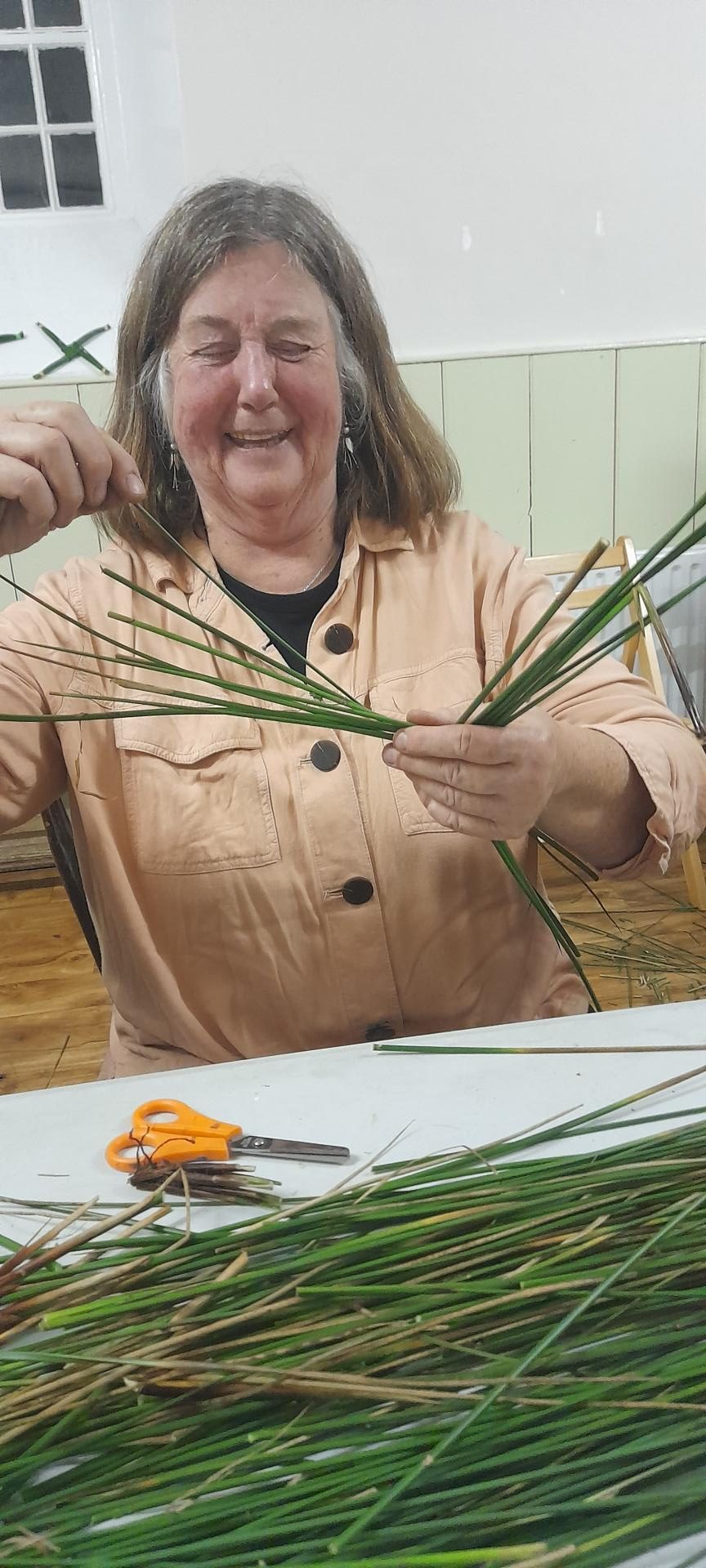
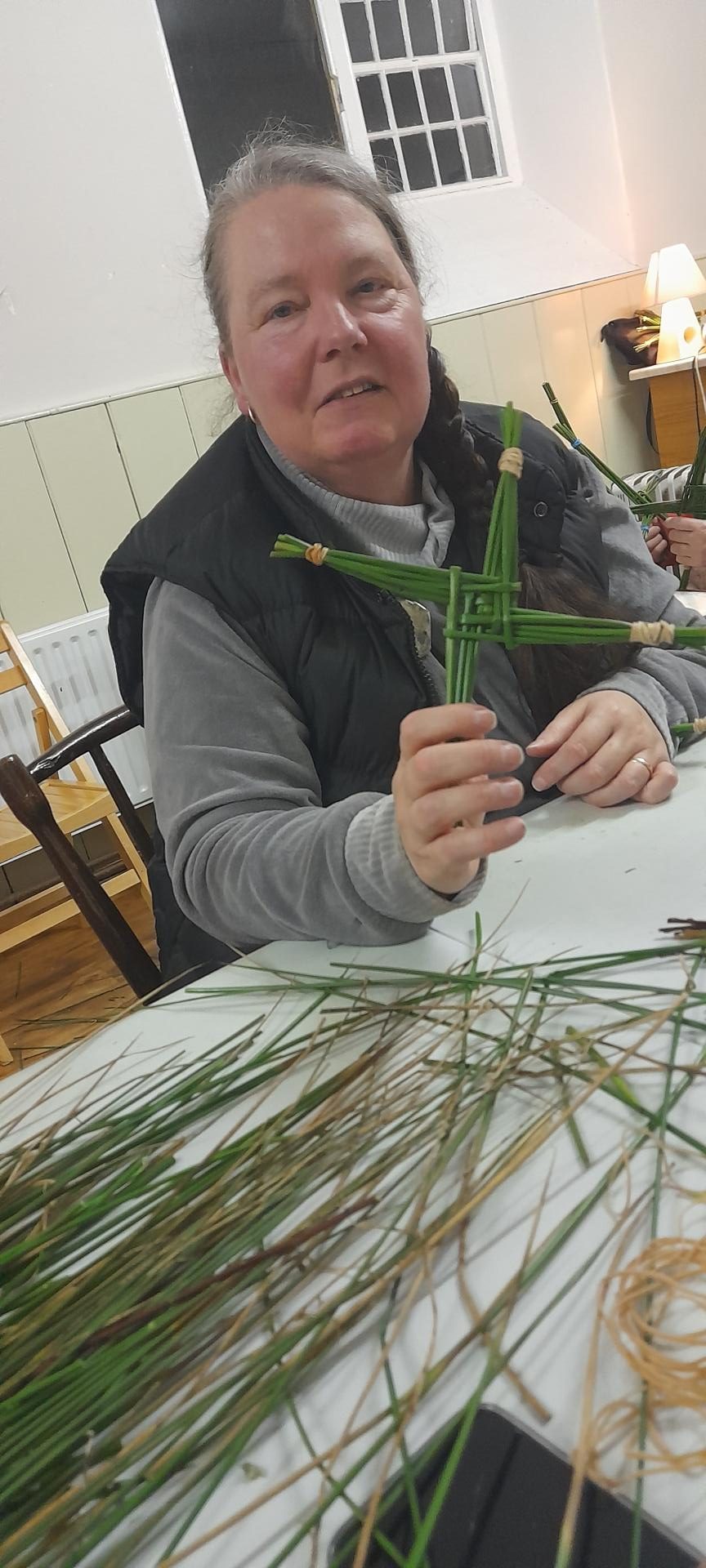
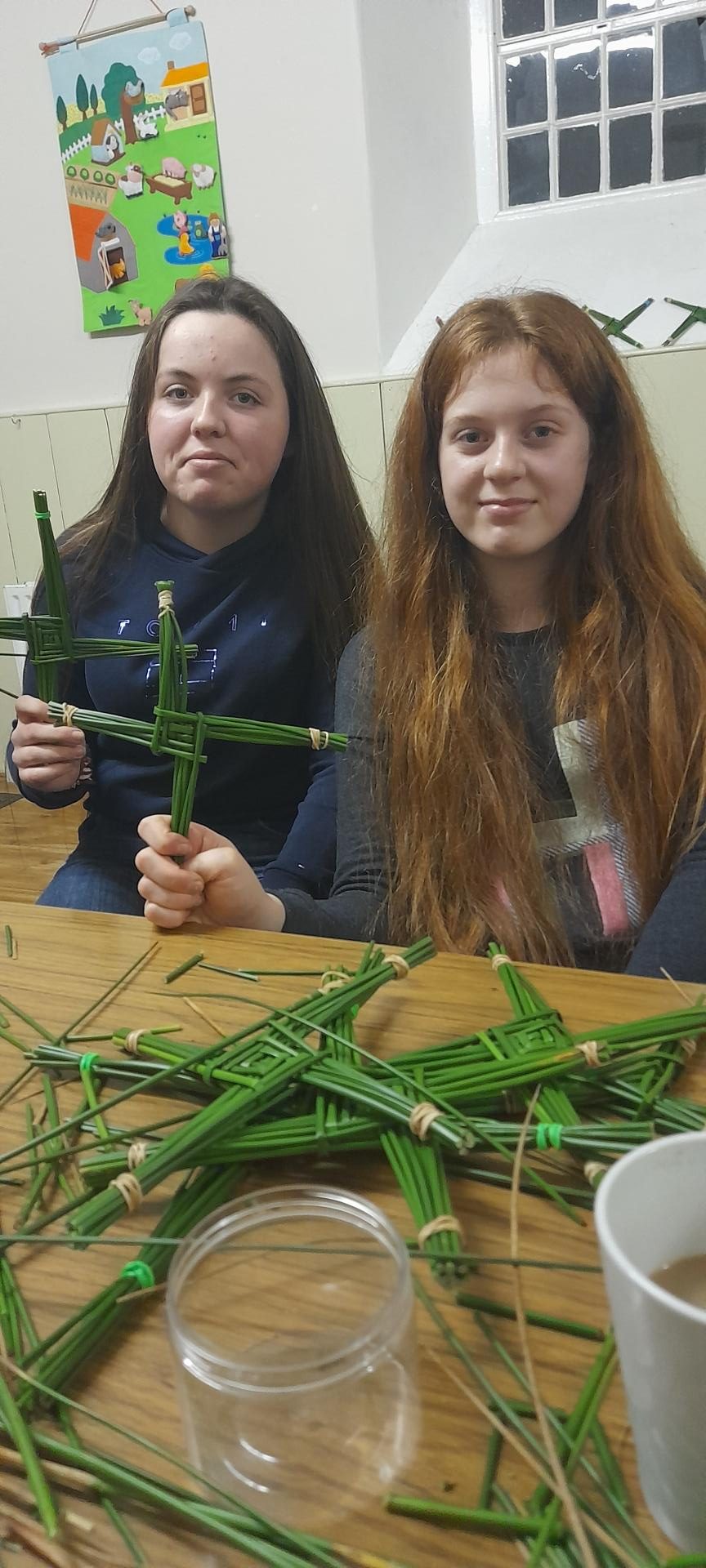
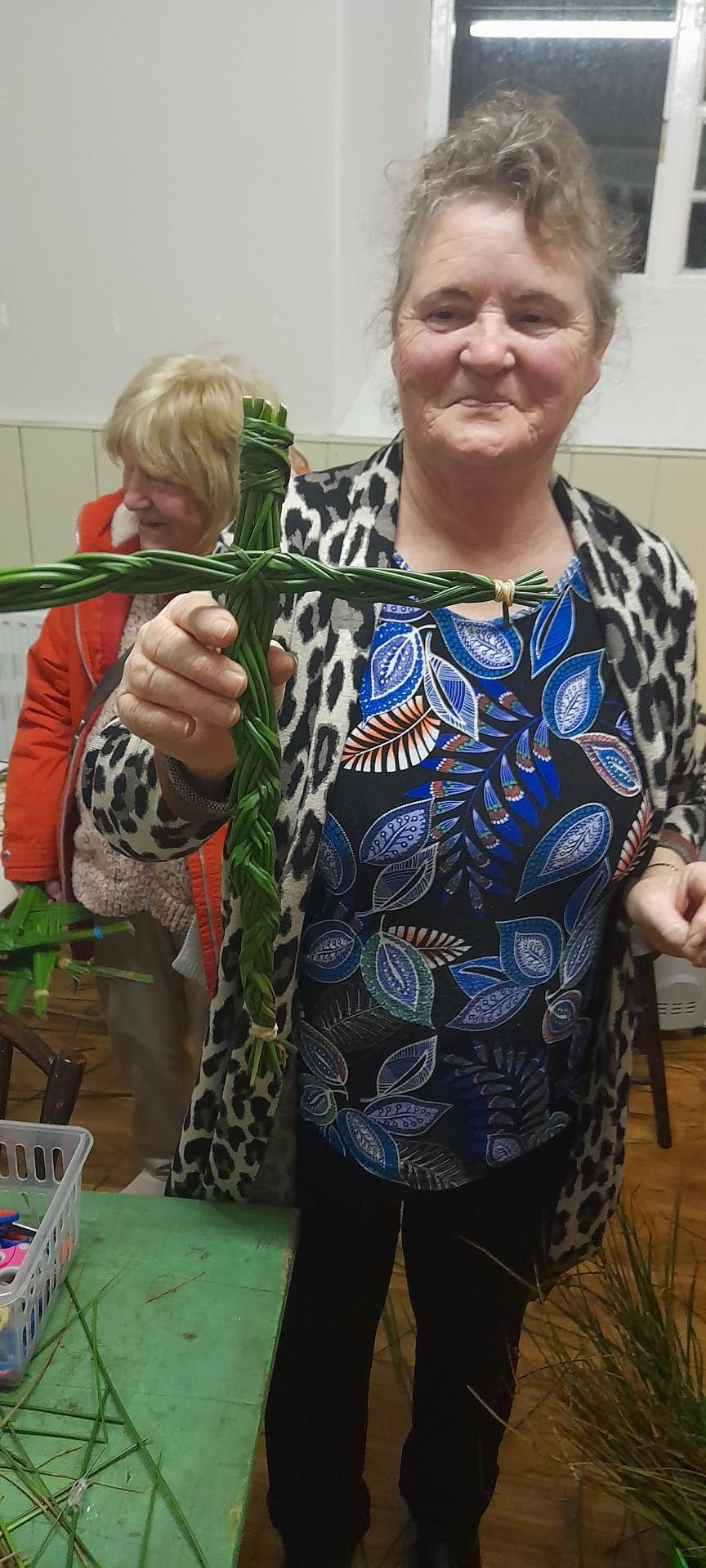
The St. Brigid’s cross is traditionally plaited from reeds or rushes and has unaligned arms.  The central part is commonly referred to as the “eye of God”. A new cross is woven each year on 1st February and  commonly placed in the rafters of Irish homes to ensure good health and fortune for the coming year.  In some localities the previous year’s cross is burned to protect the home from fire but in others the crosses of previous years can be seen in the rafters blackened by the woodsmoke of many hearth fires.